Customer experiences, Google Sheets tools, product interfaces, marketing, and sales communication had evolved across different needs and timelines.
01 ValueCore
From bespoke customer work to a more scalable product system.
I connected customer-facing value stories, Google Sheets data, reusable authoring tools, and an AI-assisted design practice—turning repeated delivery needs into product infrastructure.
Follow the evidence ↓
02
The central problem
The visible requests were varied.
The underlying problem was coherence.
I led hands-on UX and visual design across those surfaces while supporting a small team and partnering daily with leadership and engineering.
Customer work revealed reusable patterns. I translated them into a second-generation GS UI authoring model and a broader shared design foundation.
Own Direct ownership
Use Actively used tools
Adopt Engineer adoption
Release Near-release GS UI v2
03
Designed directly by me
The customer outcomes were becoming more sophisticated.
These were not template exercises. Each experience combined brand, financial logic, interaction, and explanation for a different customer context.
Evidence statusDirectly designed customer experiences
01 · AuditBoard
Total Benefits
Multi-year benefit tables, expandable value categories, detailed charts, and proportional value-driver summaries.
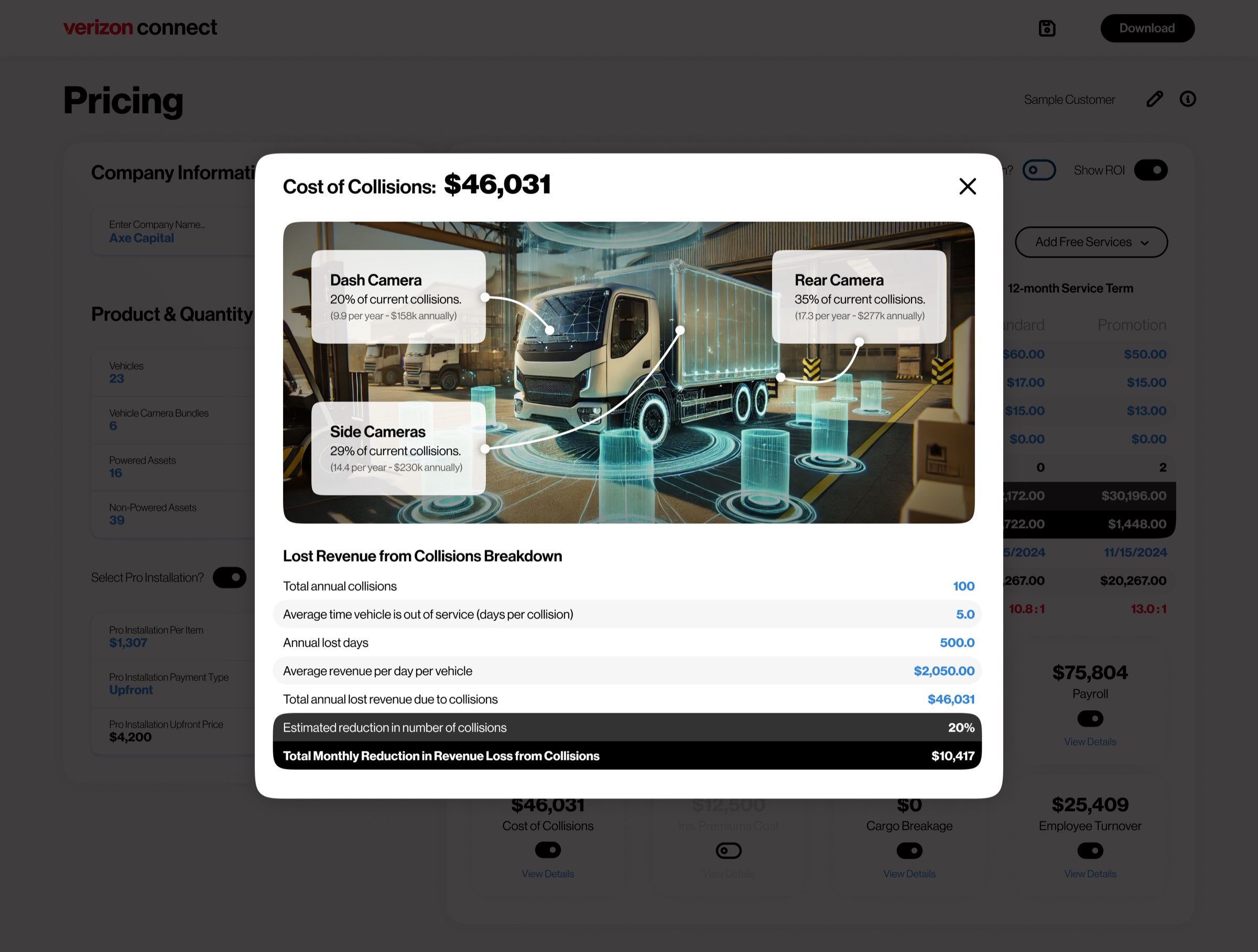
02 · Verizon Connect
Pricing + ROI
Products, terms, promotions, operational assumptions, and ROI brought into one decision surface.
03 · Flexera
Software-spend savings
Headline value, proportional visualization, multi-year comparison, and detailed financial modeling.
Better customer output was exposing the limits of the system producing it.
04
What I saw
The problem wasn’t a lack of features. It was the relationship among them.
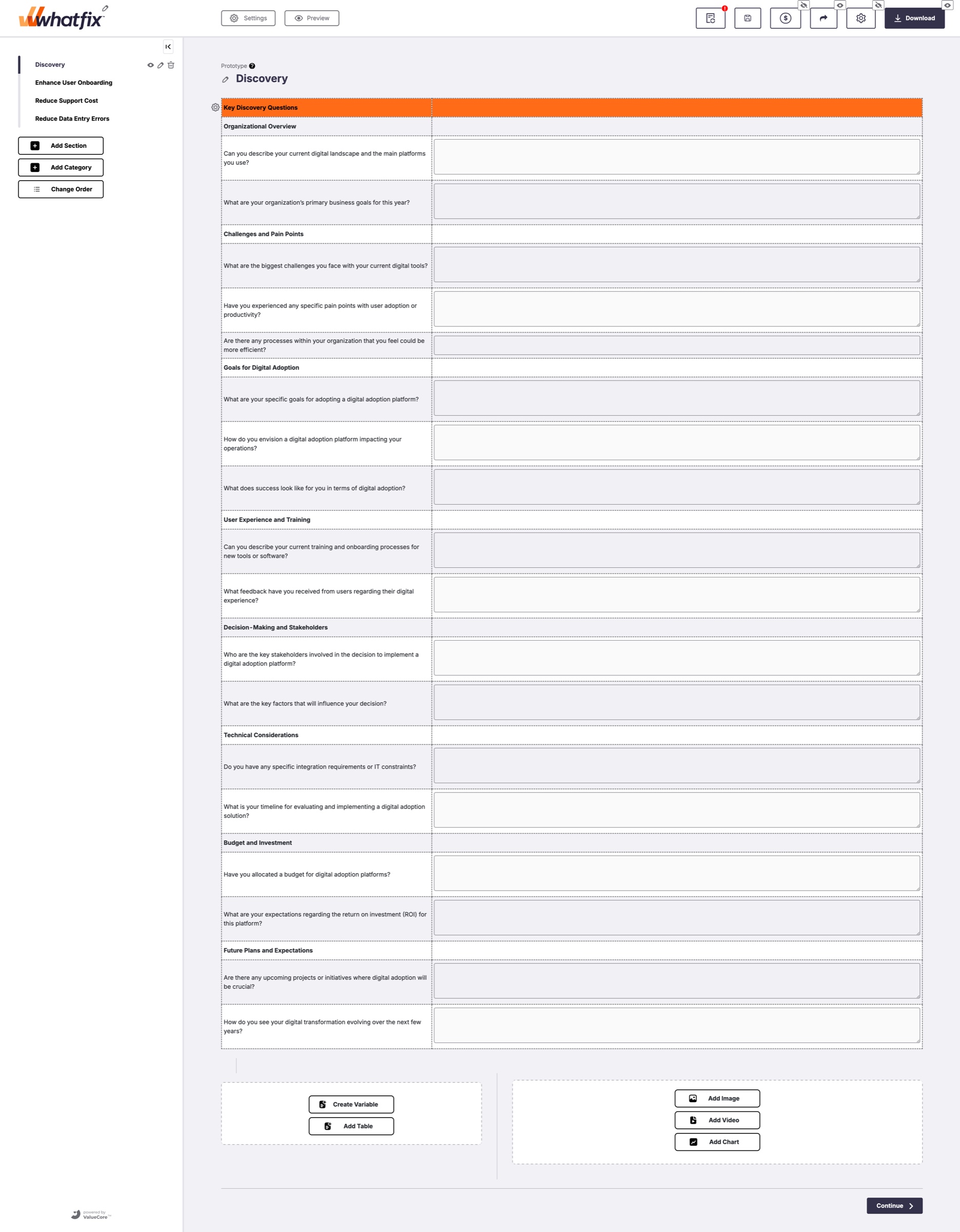
The existing tools were capable, but administrators had to understand too much of the product’s internal structure. Content, data, configuration, and presentation competed inside the same environment.
- 01Many configuration concerns visible simultaneously
- 02Long spreadsheet-like authoring canvas
- 03Internal structure drove the navigation model
- 04Limited view of the finished customer experience
05
The product opportunity
Beneath the bespoke work, the same primitives kept appearing.
Customer experiencesAuditBoard · Verizon · Flexera
↓
Repeated needsTables · calculations · charts · imagery · navigation
↓
Shared behaviorsSelect · configure · preview · save · share · download
↓
Product opportunityA reusable authoring system connected to Google Sheets
The customer work stopped being only output. It became research for the platform that needed to produce the next generation of output.
06
One engine · three clear layers
Keep Google Sheets as the engine.
Redesign everything around it.
Source data
Inputs, outputs, ranges, and variables
Experience configuration
Tables, charts, imagery, labels, layout, and interactions
Customer presentation
Branded value stories, financial results, and downloadable output
07
The redesigned workflow
Evidence statusNear-release GS UI v2 product direction
Step 01
Select the source.
Administrators identify the relevant data directly—without recreating its structure elsewhere.
- Visual range selection
- Workbook-tab navigation
- Explicit creation action
Step 02
Shape the experience.
Edit one meaningful object at a time while seeing where it lives and how the customer will experience it.
- Focused object controls
- Persistent live context
- Clear source-range access
Step 03Turn data into
Turn data into
explanation.
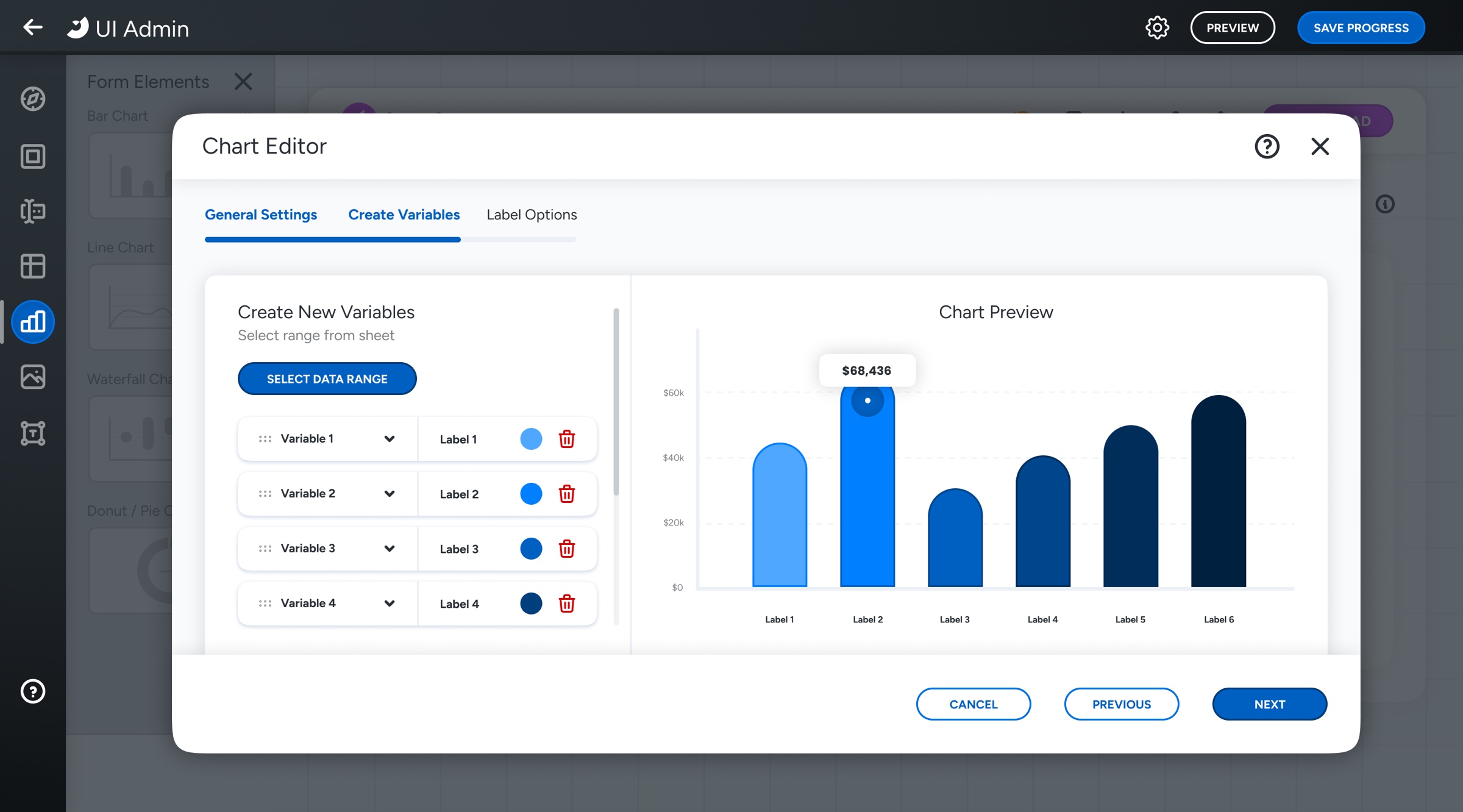
A staged editor converts an implementation problem into an understandable design task.
- Graph-type selection
- Variable and label mapping
- Live chart preview
08
Shared decisions, not isolated screens
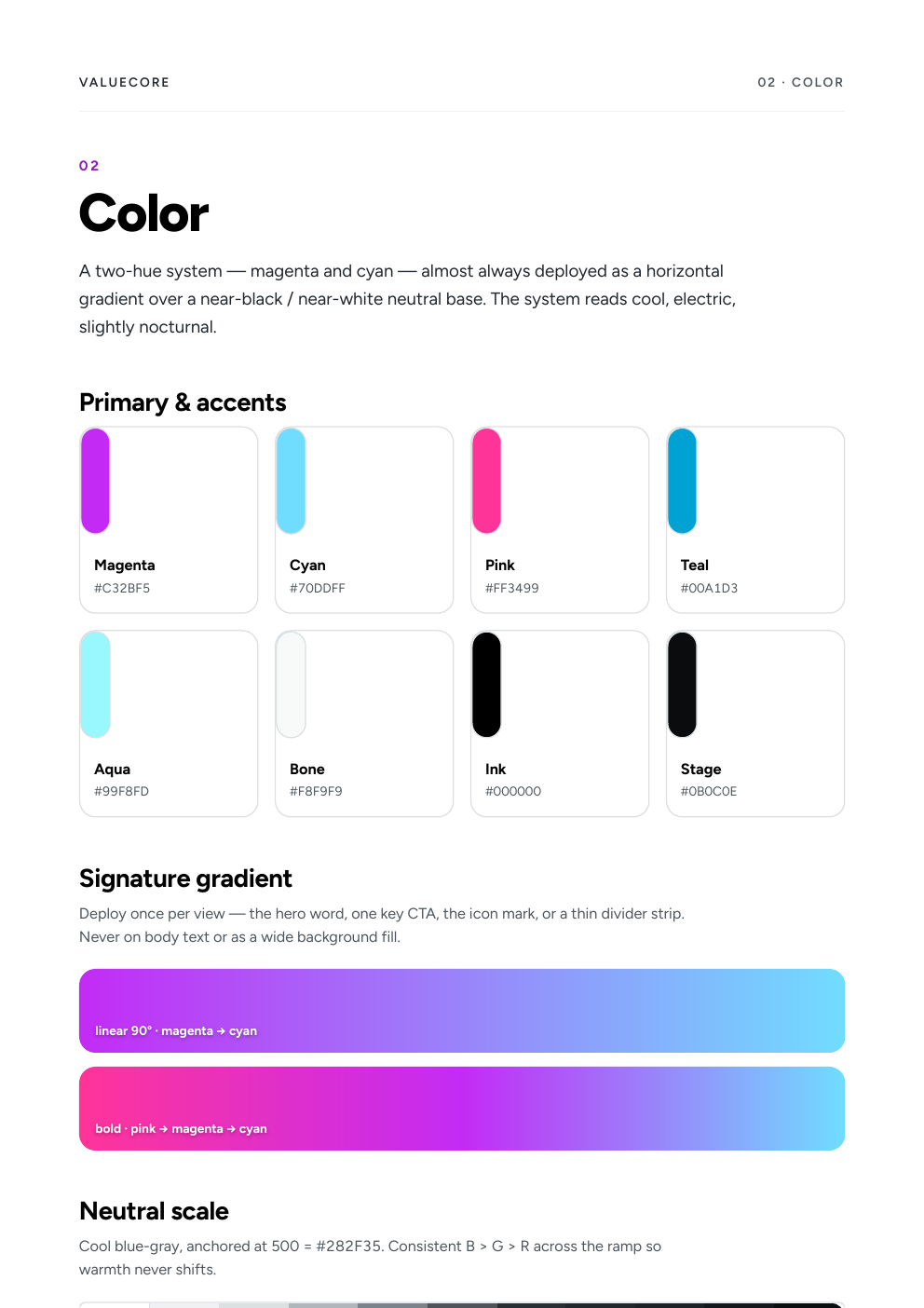
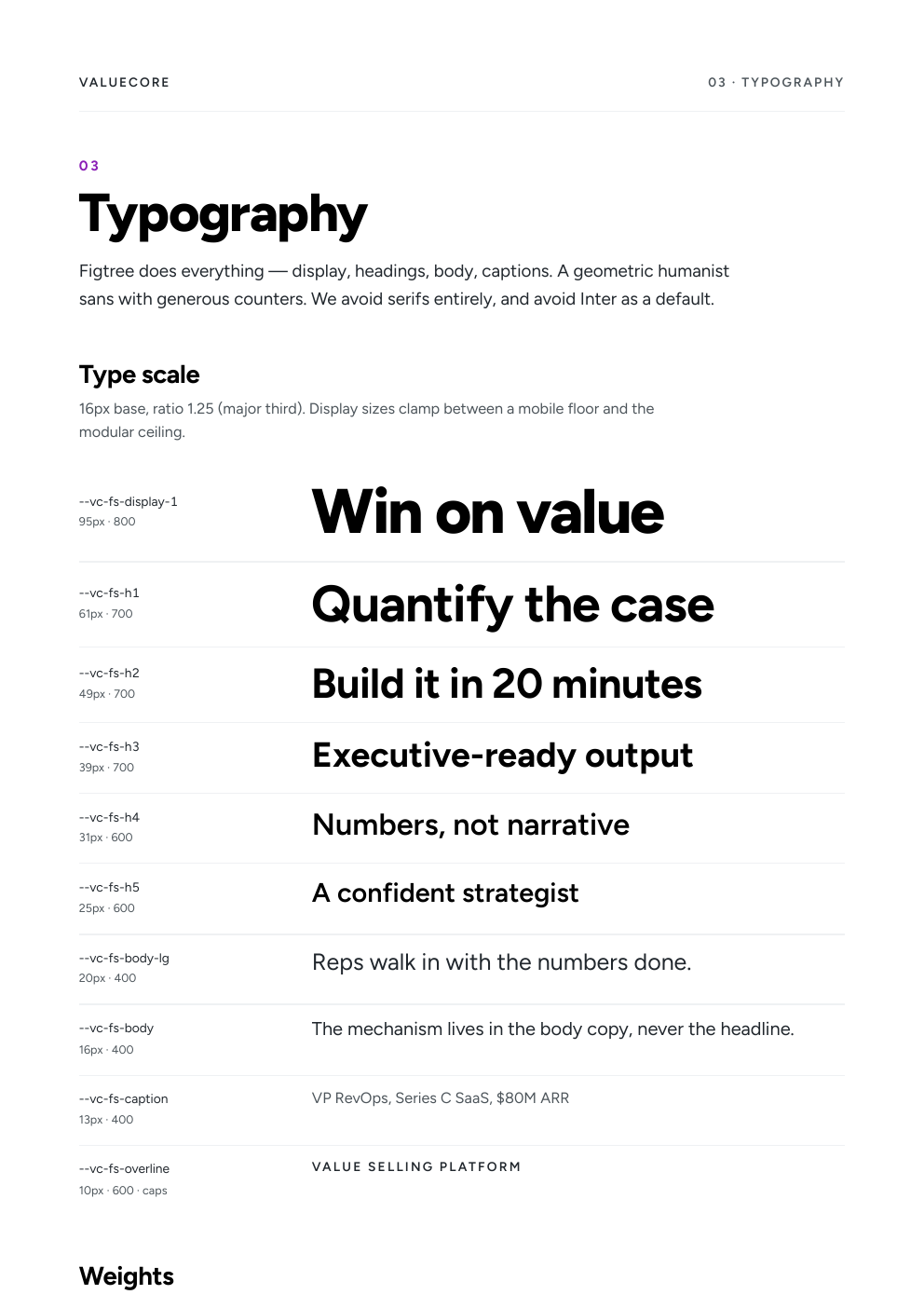
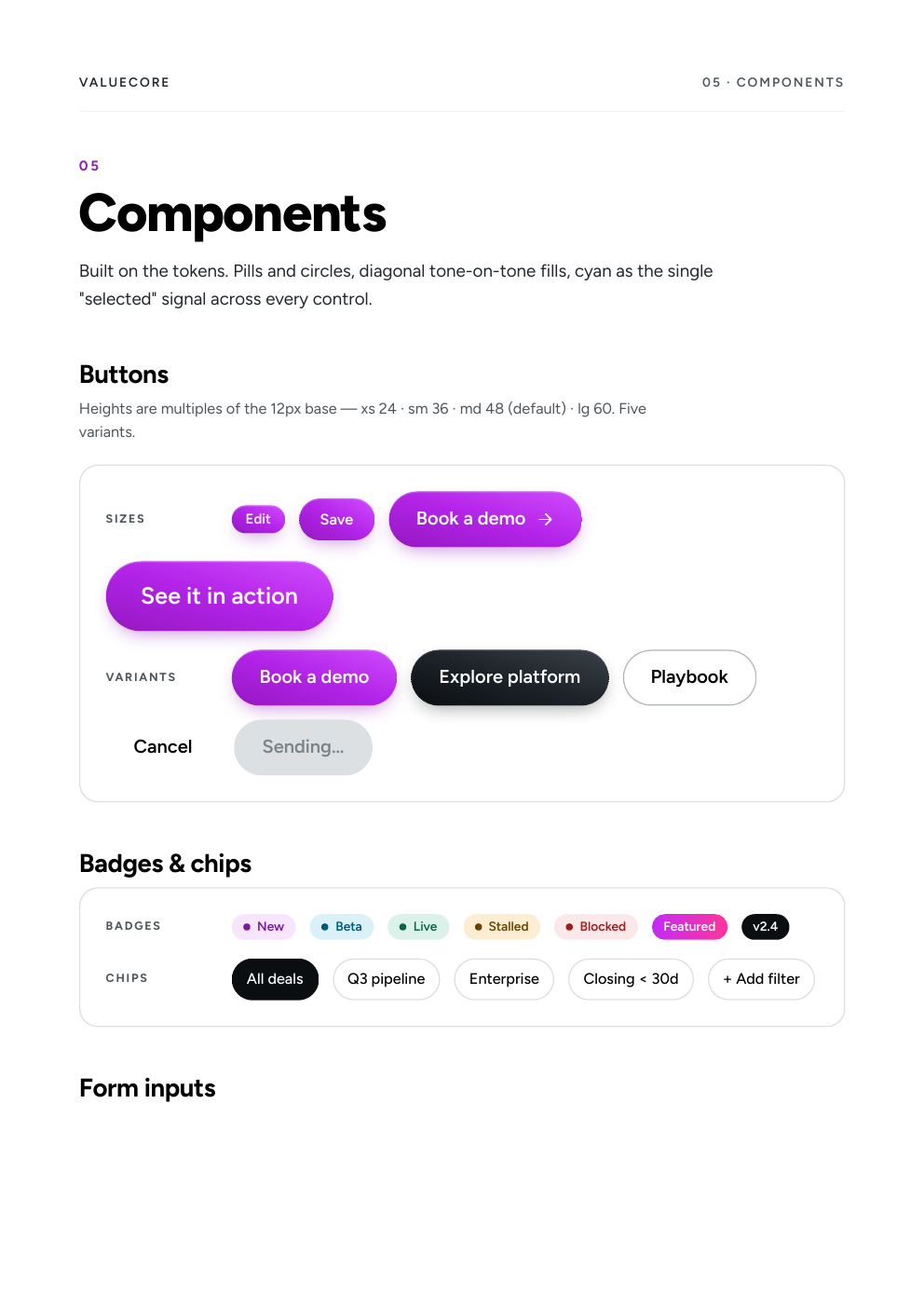
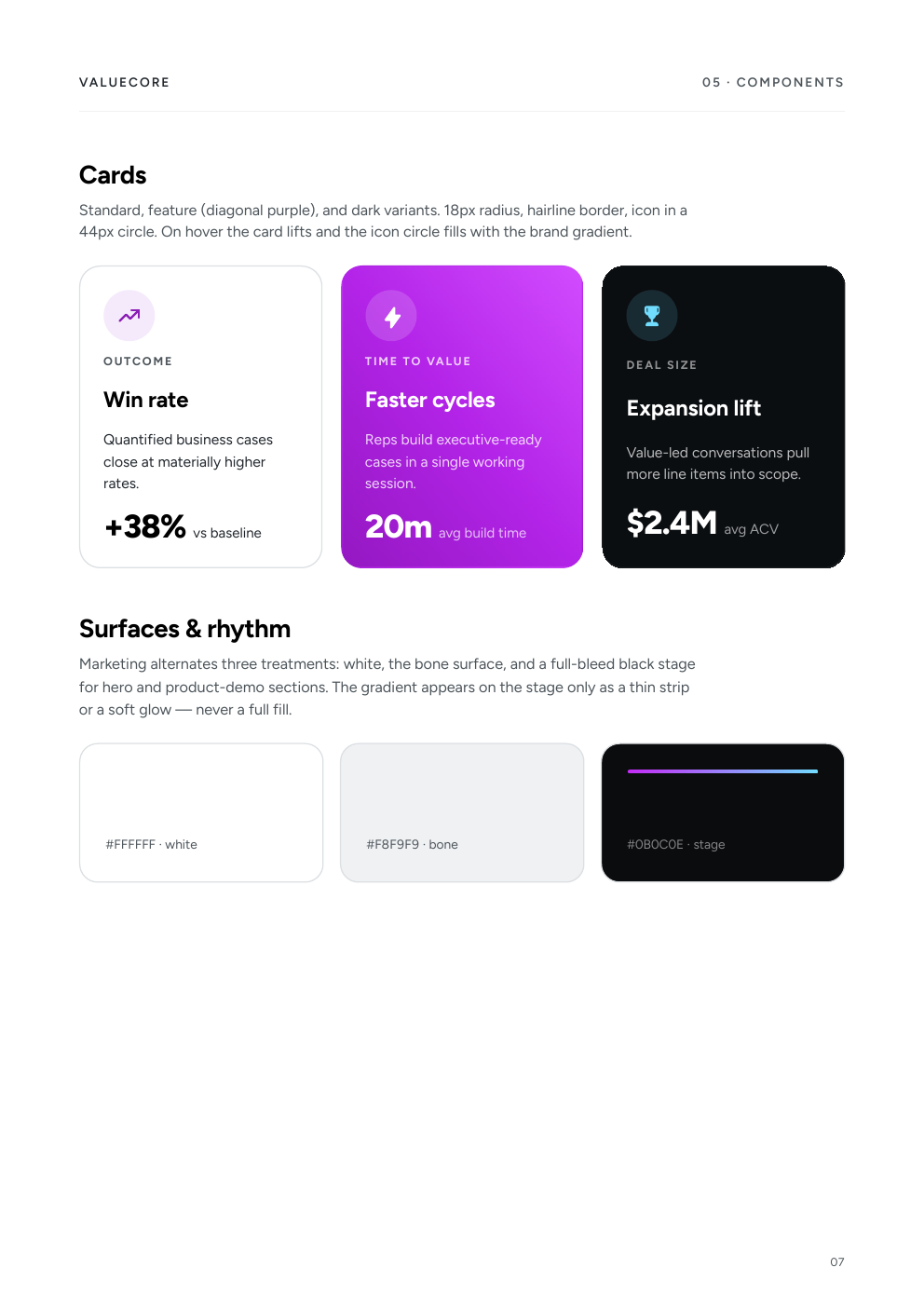
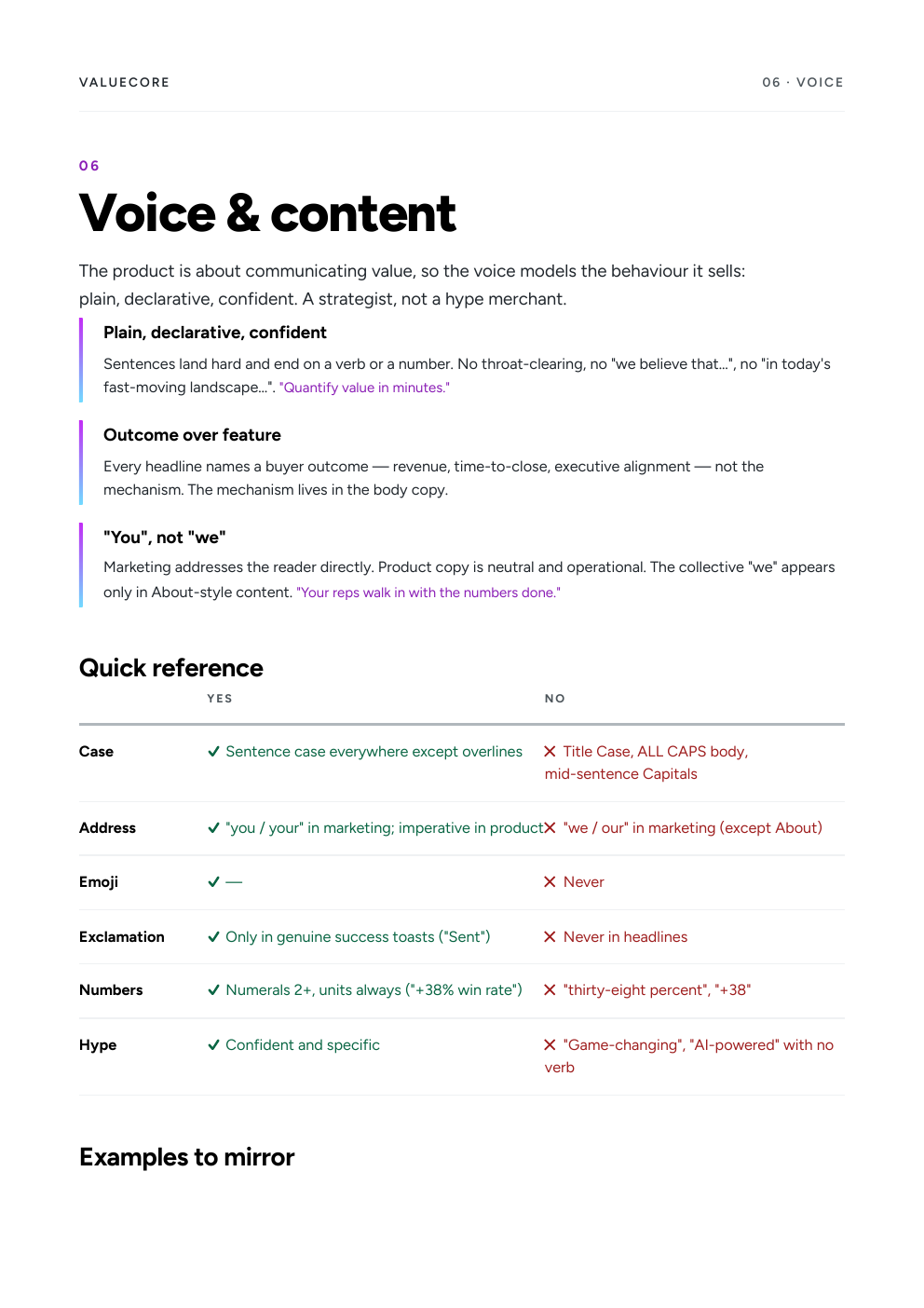
The redesign was supported by a foundation that could travel.
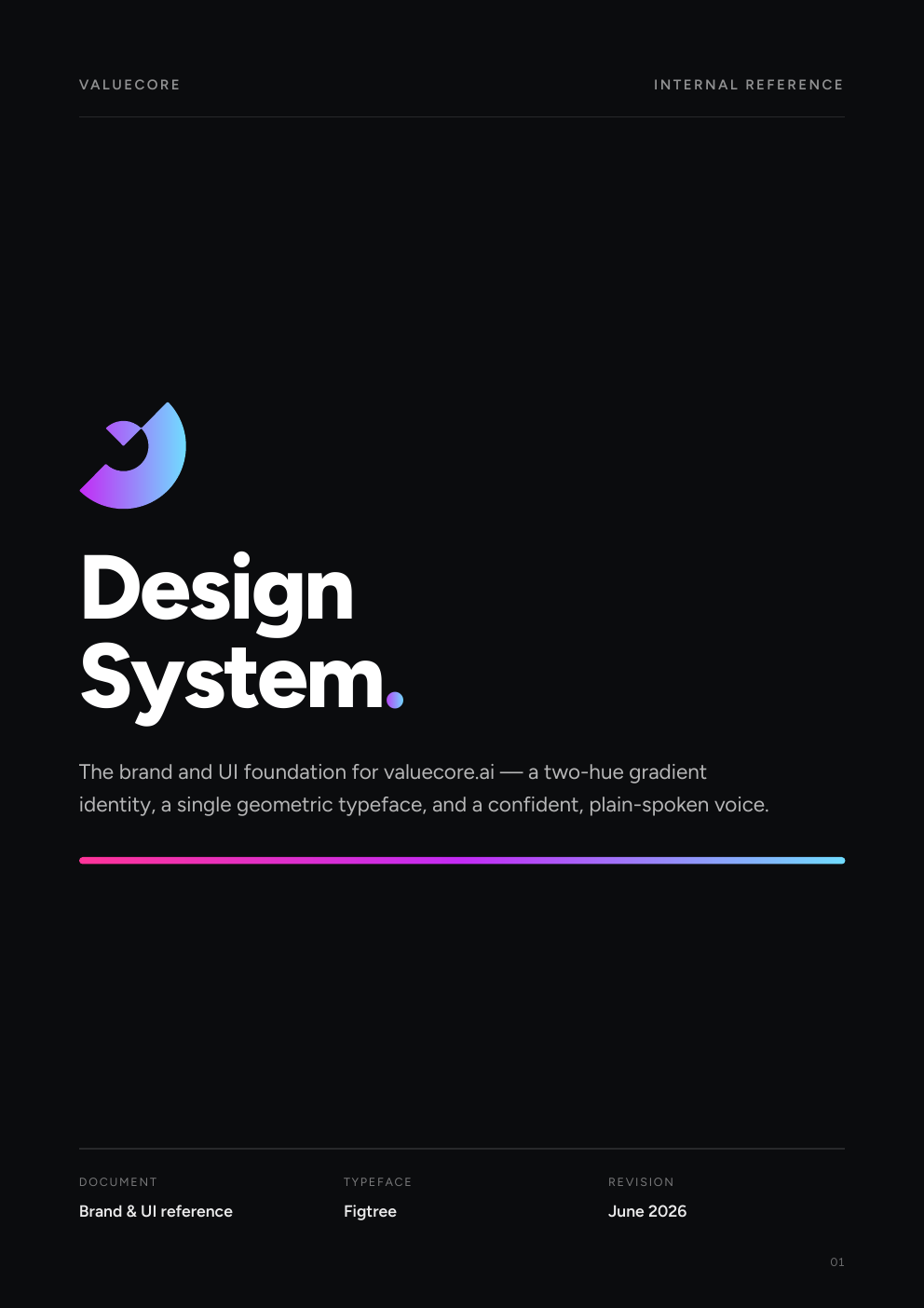
I built the ValueCore design system to preserve decisions across product, marketing, presentations, engineering, and AI-assisted workflows—not simply to catalog components.
09
AI + accountable judgment
AI increased the range. Experience determined what survived.
The first generated direction for KeyMark’s ROI calculator missed the brand, layout, and important parts of the feature set. I redirected all three.
Brand fit
Replaced generic calculator styling with a design native to KeyMark’s visual language.
Interaction path
Created a single readable journey from operational inputs to a complex three-year result.
Feature integrity
Restored ROI composition, payback, hours saved, and the custom-report action required for a credible decision.
Delivered, implementation-ready designInteractive prototype
ValueCore delivered the redesign for customer implementation. It had not been publicly deployed by KeyMark as of September 2026.
AI accelerated
Synthesis · interface exploration · interactive production · alternative structures
I remained responsible for
Product interpretation · UX architecture · hierarchy · brand accuracy · complexity reduction · final quality
10
Evidence, not inflation
A clearer workflow with infrastructure built for the next customer.
- Customer and internal tools were actively used
- Shared grids, type, components, and patterns were adopted by engineers
- More capability with less learning burden
- GS UI v2 was approaching release when my role ended
- Customer response to the Verizon work was strongly positive
My operating principle
AI expanded the number of possibilities I could explore. Experience determined which possibilities deserved to survive.